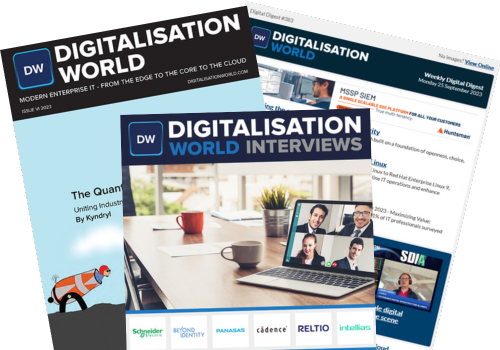
Digital Newsletter
Each week our editor Phil Alsop rounds up the most popular articles, videos and expert opinions. We compile this into a Digital Newsletter and send it straight to your inbox every week.
Digital Magazines
We'll let you know each time a new edition of Digitalisation World is released so that you're always kept up-to-date with the latest and greatest news and press releases.
Video Magazines
The Digitalisation World Video magazine contains the latest Zoom interviews with experts in the industry.
When asked why their organizations are experiencing inefficiencies, only 50% of respondents reported their technology stack met employee needs while others recognized the need for change. For example, 88% said having empowered, autonomous teams is critical to an organization's future success and 80% said agile and innovative workers played a big role in helping ensure business continuity and success during disruption.
“The pandemic has revealed that many organizations are battling a critical disconnect when it comes to their technology: the platforms they currently use do not fully empower their workforce to drive innovation and have organizational impact,” said Mark Mader, CEO of Smartsheet. “We believe that to effectively compete, businesses must transform to work more dynamically - to simplify, streamline and integrate how work is initiated, managed, and delivered by their people and by their teams.”
As organizations look forward, 86% agree the pandemic has changed the way their leadership is thinking about future-proofing the business. Nearly three-quarters (71%) of respondents agree that going forward, they expect their organization’s leadership to entrust teams with innovating based on their own specific needs. In addition, over half (54%) feel their organization’s innovation will be equally driven by employees and senior leadership opposed to 40% pre-pandemic.
“Organizations without the right technology pre-pandemic not only had to overcome the consequences of technology-based inefficiencies but their workforce also suffered resulting in decreased morale and lower productivity,” said Alex Clemente, Managing Director of Harvard Business Review Analytic Services. “This impact on the workforce is driving a change in how leadership is approaching technology in the long-term, by empowering teams to be the catalyst of innovation and remain productive and competitive.”