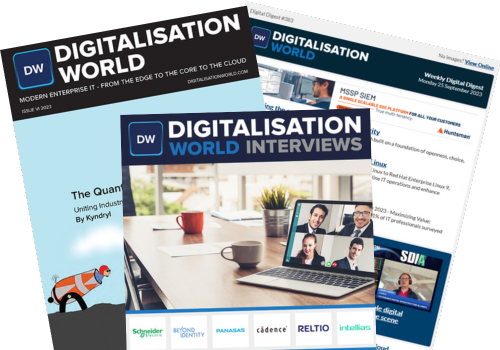
Digital Newsletter
Each week our editor Phil Alsop rounds up the most popular articles, videos and expert opinions. We compile this into a Digital Newsletter and send it straight to your inbox every week.
Digital Magazines
We'll let you know each time a new edition of Digitalisation World is released so that you're always kept up-to-date with the latest and greatest news and press releases.
Video Magazines
The Digitalisation World Video magazine contains the latest Zoom interviews with experts in the industry.
Of these thousands of daily customer interactions, there is a 91 per cent in-scope resolution rate for private banking customers, and 95 per cent resolution rate for corporate customers.
The bank, which has over 9 million private customers and more than 500,000 active corporate accounts, chose the Boost.ai platform over both in-house and previous external chatbot solutions. Boost.ai dominates the Nordic banking market, currently used by nine of the ten largest Scandinavian banks.
In a change of strategy, Nordea has adopted a chat-first approach to banking across all markets, meaning that all online customer queries are first received by a chatbot, and over 50% of customers say that they get the help they need from this initial interaction. If a query cannot be resolved by a virtual agent, a seamless transition to a human agent takes place.
Nordea initially adopted one virtual agent from Boost.ai, named Nova, which took only three months to build. Today, the bank uses 12 different virtual agents across four Nordic markets, powered by natural language processing (NLP) and natural language understanding (NLU) algorithms.
Sanjeev Kumar, VP EMEA at Boost.ai, said, “Nordea presents a perfect example of how much simpler, more effective, and more successful banking can be, if financial institutions understand the impact conversational AI can have. By adopting this technology, banks can save millions of minutes in customer time while simultaneously improving the consumer experience. Similarly, it gives bank employees time to apply skills where they will make a difference, rather than mindlessly repeating rudimental tasks.”
Mattias Fras, Group Head of AI Hub at Nordea, stated, “For banks, AI is going to be transformative across a wide range of applications. At Nordea, we acknowledge the importance of a scalable chatbot strategy that the boost.ai platform enables. It is a key component towards human-centered digital transformation."