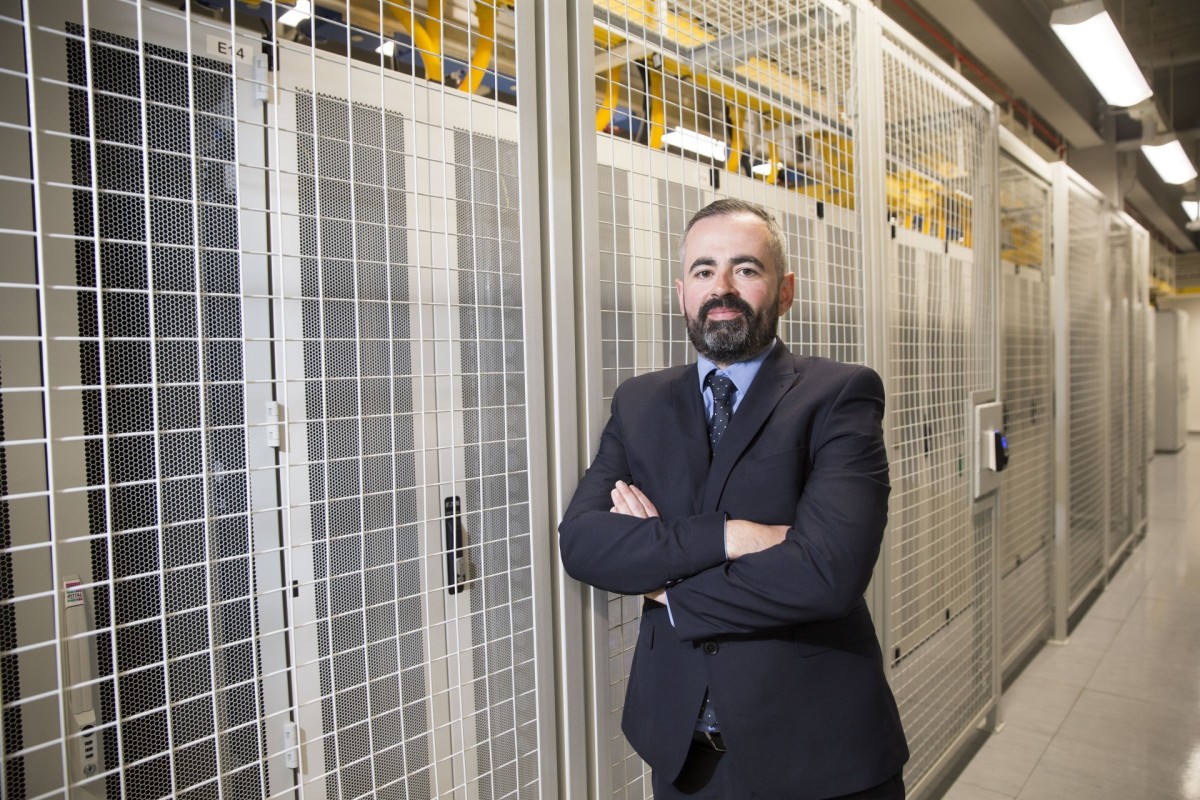
DataVita – Scotland’s largest data centre and cloud services provider – has invested in new infrastructure and capabilities to host the high-performance computing (HPC) workloads, supporting the exponential growth of artificial intelligence (AI) and machine learning.
This marks a significant milestone, allowing for the hosting of high-density workloads at DataVita's DV1 facility in Lanarkshire – a first for Scotland. As one of the UK's most energy-efficient data centres, the facility now boasts the capacity to accommodate up to 100kW per rack for air cooling and up to 400kW per rack for liquid cooling. This enhancement significantly exceeds the capabilities of standard racks, providing essential support for the requirements of HPC, and represents a major leap forward for the Scottish data centre market.
According to the US International Trade Administration, the UK’s AI market is currently valued at over £16.9 billion and it is estimated to add £803.7 billion to the UK economy by 2035[1]. Alongside the accelerated adoption of generative AI models such as ChatGPT over the last year, DataVita said it has witnessed a huge surge in the volume of enquiries for high-capacity hosting and is already in talks with a number of globally significant tech providers.
The higher proportion of renewable sources in Scotland's energy mix means there is a much lower carbon footprint associated with hosting data centres in the country compared to the rest of the UK and other nations. Relocating a 200-rack facility from London to Scotland would save over 6 million kgCO2e, equivalent to over 14 million miles driven by the average mid-sized car. Compared to Poland, it would reduce carbon emissions by 99%.
Scotland generated more renewable power than it used for the first time in 2022 and, therefore, has plenty of capacity to host the data needs of AI. Organisations could also save up to 70% on their data centre costs because of factors such as the country’s natural climate, which reduces the need for additional cooling.
Danny Quinn, MD of DataVita, said: “AI is one of the fastest growing sectors of technology and could have huge benefits for businesses, as well as public services and the wellbeing of citizens who use them. However, to support its widespread use we need to have the infrastructure in place to underpin the advanced computing power and data it requires.
“While other European nations are struggling with power and capacity, Scotland has a surplus of renewable energy that could be used to power this new and exciting technology that everyone is talking about. We see a big opportunity tied to the growing global demand, which is why we have redesigned elements of our DV1 facility to match the needs of AI and HPC providers.
“The location is ideal for companies aiming to reduce the carbon footprint of their IT provision while maintaining unmatched resilience, security, power and connectivity. By using Scotland’s natural resources and existing renewable energy infrastructure, we are proving that increasing AI data workloads does not need to come at the expense of the environment.”