Digital Newsletter
Each week our editor Phil Alsop rounds up the most popular articles, videos and expert opinions. We compile this into a Digital Newsletter and send it straight to your inbox every week.
Digital Magazines
We'll let you know each time a new edition of Digitalisation World is released so that you're always kept up-to-date with the latest and greatest news and press releases.
Video Magazines
The Digitalisation World Video magazine contains the latest Zoom interviews with experts in the industry.
The quest for enhanced connectivity extends far beyond Earth. India's digital revolution is seeing a cosmic expansion, as satellite-powered broadband transitions from speculation to reality.
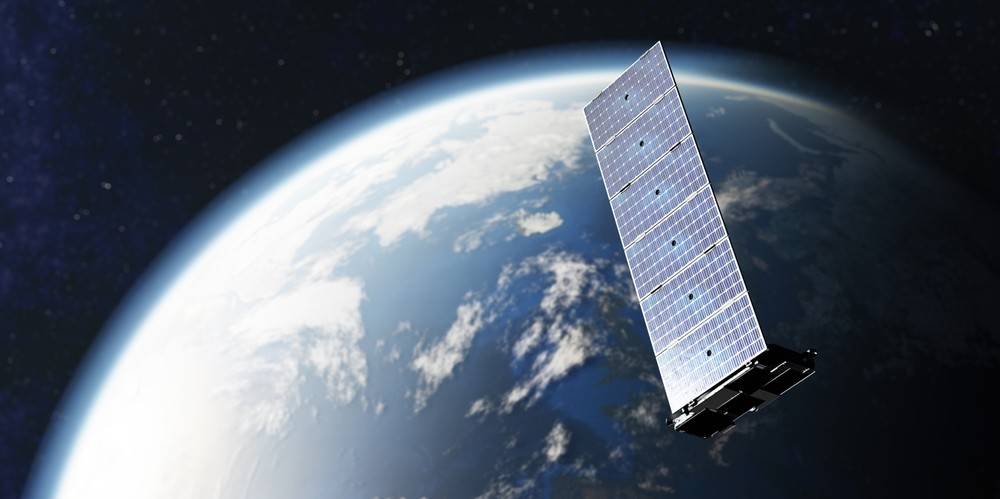
A landmark development in this journey is DE-CIX India's integration of Starlink into its interconnection ecosystem, notably becoming the nation's first Internet Exchange (IX) platform to do so. As Starlink secures its commercial license from India's Department of Telecommunications, with final clearance expected between late 2025 and early 2026, the path is set for unprecedented connectivity solutions.
The implications are significant not just for the satellite sector, but also for the broader objectives of Digital India. Starlink's offerings, priced strategically to be accessible to a diverse demographic, promise high-speed access in areas struggling to stay connected through traditional means. Hardware costs are pegged around ₹33,000, with operational fees between ₹3,000 and ₹4,200 monthly.
As Starlink gears up for deployment, its capacity to deliver speeds between 25 and 220 Mbps opens doors to true broadband-grade service, even in mountainous, rural, or island geographies that fibre optics cannot reach. This is entirely in line with DE-CIX’s enduring aim to meld satellite, fibre, and mobile connectivity to foster inclusive digital experiences.
However, satellite systems thrive on terrestrial support. DE-CIX has proven its interconnection infrastructure's resilience, meeting the demands of hyperscale performance. As Starlink sets foot in India, its reliance on global standards of uptime and compliance ensures long-term success as it strives to bridge the digital divide.
LEO satellites are creating fresh opportunities for areas long excluded from the digital mainstream. Regardless of technology advancements, their performance is tightly knit with terrestrial digital networks, crucial for latency-sensitive functions like streaming and gaming. This is where DE-CIX’s Space-IX program plays an instrumental role, offering interconnection solutions anchoring orbital networks into robust terrestrial infrastructure.
By assimilating into DE-CIX India, Starlink is evolving into a full-fledged ISP, complementing, rather than competing with, existing terrestrial and mobile networks. DE-CIX's vast neutral interconnection ecosystem enables satellite operators to connect locally yet operate globally, ensuring ultra-low latency in far-flung areas.
This pivotal moment offers a glimpse into the future of when next-gen satellite access aligns with a trusted, high-performance terrestrial ground layer. With robust infrastructure, multiple 100 GE ports, and integration into key connectivity hubs across India, DE-CIX is spearheading an inclusive digital future.